When Export Opportunity Becomes Export Exposure
For many Atlantic Canadian businesses, exporting has long felt like a natural path to growth. The region is outward-looking by geography, connected by ports, fisheries, forestry, energy, agriculture, advanced manufacturing, technology, education, and professional services. For New Brunswick in particular, the United States has traditionally been the most obvious and accessible export market.
But recent events have exposed a difficult truth: proximity is not the same as security.
The renewed tariff conflict between the United States and Canada under President Donald Trump demonstrated how quickly market assumptions can change. In 2025, the U.S. imposed tariffs on Canadian imports, and Canada responded with retaliatory tariffs on U.S. goods. Canada also requested WTO consultations over what it described as unjustified U.S. tariffs.
For Atlantic Canadian exporters, the lesson is not simply political. It is financial and strategic. A business can win a foreign customer, sign a contract, ship the product, and still lose money if tariffs, freight costs, currency movements, credit risk, compliance obligations, or working capital pressures are not properly understood.
Exporting is not growth unless it is profitable, resilient, and risk-informed.
The New Trade Reality
Canada’s dependence on the United States has become both an advantage and a vulnerability. In 2024, roughly three-quarters of Canada’s merchandise exports went to the U.S., making it by far Canada’s largest export market.
That concentration worked well when the relationship was stable. It becomes dangerous when policy shifts, tariffs, border delays, or political tensions alter the economics overnight. Prime Minister Mark Carney has framed Canada’s response around diversification, with a stated goal of doubling non-U.S. exports over the next decade.
His more recent trade outreach to India, Australia, and Japan reflects the same strategic logic: Canada must deepen relationships with other middle powers and reduce overdependence on a single market. During that trip, Carney stated: “In a more uncertain world, Canada is focused on what we can control. We are diversifying our trade and attracting massive new investment.”
For Atlantic Canadian businesses, this creates both opportunity and obligation. Opportunity, because new markets are opening. Obligation, because new markets bring new risks.

Goods Exports and Services Exports: Different Risks, Same Discipline
Export risk is often discussed as if all exporters face the same challenges. They do not.
| Goods Exporters | Services Exporters |
| Tariffs and customs duties | Foreign licensing and regulatory rules |
| Freight, fuel, warehousing, spoilage | Data privacy and cybersecurity |
| Product certification and labelling | Intellectual property protection |
| Border delays and logistics disruption | Cross-border tax and permanent establishment risk |
| Marine cargo insurance | Contract enforceability |
| Inventory and working capital pressure | Payment collection and currency exposure |
| Sanctions and restricted-party screening | Talent mobility and immigration constraints |
A seafood exporter shipping to Asia faces very different risks from a cybersecurity consultant selling services to Europe. A wood products manufacturer entering the U.S. faces different exposure from a SaaS company selling subscriptions globally. Yet all exporters share one common requirement: they must understand the true economics of the market before expanding.
The Hidden Question: Is the Export Market Actually Profitable?
Many businesses analyze export revenue. Fewer analyze export profitability. That is a mistake. A customer in Boston, Mumbai, London, Dubai, or Tokyo may look attractive on the top line. But the real question is what remains after:
- freight and insurance;
- tariffs and duties;
- distributor margins;
- currency fluctuations;
- product adaptation;
- legal and compliance costs;
- payment delays;
- financing costs;
- after-sales support;
- inventory holding costs;
- travel and business development expenses.
A market that produces $1 million in export sales may contribute less profit than a smaller domestic market if the full cost-to-serve is not understood. This is where structured financial management becomes essential. Exporters should know margin by country, margin by customer, landed cost by product, working capital cycle by market, and sensitivity to foreign exchange and logistics costs. Without that visibility, international expansion can quietly erode value.

Logistics Risk Is Back
For years, many businesses treated logistics as an operational issue. Today, it is a strategic risk.
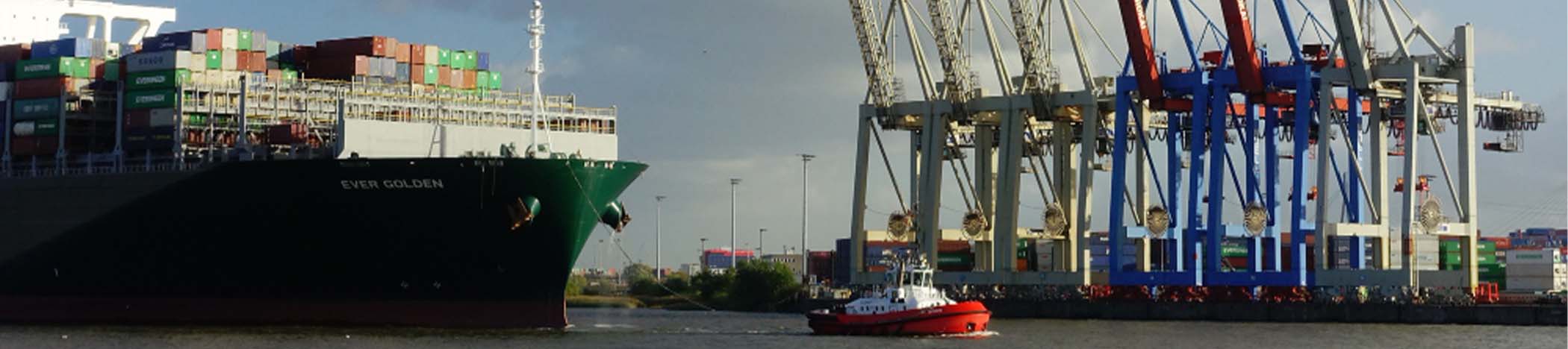
Oil price volatility, maritime chokepoints, geopolitical conflict, port congestion, insurance costs, and shipping delays can all affect export margins. Recent disruption around the Strait of Hormuz highlighted the vulnerability of global energy and shipping flows, with UNCTAD warning that disruptions can have lasting consequences for transport, fuel, food, and vulnerable economies.
For Atlantic Canadian exporters, this matters even when the disruption is far away. Higher fuel costs affect freight rates. Delayed vessels affect delivery commitments. Insurance premiums affect margins. Longer routes affect working capital. A contract that appeared profitable at signing can become loss-making before delivery.
Exporters therefore need scenario models, not single-point forecasts.
What Can Go Wrong?
Export-dependent businesses face several recurring failure points:
- Customer concentration risk: relying on one foreign buyer or one country.
- Currency risk: selling in USD, EUR, GBP, or INR while costs remain in CAD.
- Tariff risk: sudden changes in duties or trade policy.
- Credit risk: foreign customers delaying or defaulting on payment.
- Compliance risk: customs, sanctions, labelling, certification, tax, privacy, or anti-bribery rules.
- Logistics risk: shipping delays, freight increases, port disruption, spoilage, or damage.
- Strategic risk: entering a market because it looks attractive, without validating demand, pricing, cost structure, or competitive positioning.
- Working capital risk: funding production, inventory, shipping, and receivables for longer cycles than the business can sustain.
These risks do not operate separately. They compound. A tariff increase combined with a weaker Canadian dollar, higher freight costs, and a slow-paying customer can turn an export success story into a liquidity crisis.
The Export Financial Model
Before entering a new market, an exporter should build a market-entry financial model. At minimum, it should answer:
- What is the expected revenue by market and channel?
- What is the full landed cost?
- What is the gross margin after freight, duties, insurance, and distributor costs?
- What is the cash conversion cycle?
- What happens if freight costs rise by 20%?
- What happens if the CAD/USD rate moves by 10%?
- What happens if tariffs increase?
- What is the break-even sales volume?
- What is the payback period on market-entry investment?
- What is the downside case?
The purpose is not to predict the future perfectly. It is to understand which assumptions matter most.
Export Risk Assessment
Alongside the financial model, exporters should conduct an export strategic risk assessment. This should include:
| Risk Area | Key Question |
| Market risk | Is demand real, durable, and profitable? |
| Political risk | Could policy, tariffs, or sanctions affect trade? |
| Currency risk | Are revenues and costs exposed to FX movements? |
| Credit risk | Can the customer pay, and when? |
| Logistics risk | Can we deliver reliably and at an acceptable cost? |
| Compliance risk | Do we understand local laws, customs, taxes, and documentation? |
| Operational risk | Can our systems handle export complexity? |
| Strategic risk | Does this market fit our long-term strategy? |
This assessment should not be a theoretical document. It should inform pricing, contracts, payment terms, insurance, hedging, market selection, and board-level decisions.
Government support exists, but it does not replace discipline
Canada has several programs and institutions designed to help exporters. The Trade Commissioner Service supports Canadian companies with export advisory services, market information, trade events, funding, and access to international networks, with a presence in more than 160 cities worldwide.
Can Export SMEs provides competitive funding to eligible Canadian SMEs expanding into new international markets, with successful projects eligible for up to $50,000 in funding for international business development activities.
Export Development Canada also supports Canadian trade through services such as export credit insurance, financing, bonding, working capital support, and market expertise. These supports are valuable. But they do not answer the most important internal question: should this business enter this market, on these terms, at this price, with this level of risk? That remains a management responsibility.
What Atlantic Canadian Exporters Should Do Now
Atlantic Canadian businesses considering export growth should begin with five practical steps.
- Conduct an export profitability analysis by market, product, customer, and channel.
- Build an export financial model before committing capital to a new market.
- Prepare an export risk register covering tariffs, currency, logistics, credit, compliance, tax, cyber, and customer concentration.
- Review payment terms and credit protection, particularly for new foreign buyers.
- Use available government support but combine it with internal financial discipline and enterprise risk management.
Final Reflection
The next decade will reward businesses that export intelligently, not merely internationally.
For Atlantic Canadian businesses, the opportunity is real. Canada is actively seeking to diversify trade. New markets such as India, Europe, Japan, Australia, the Middle East, and Southeast Asia may offer meaningful growth potential. But the businesses that succeed will not be those that simply chase foreign revenue. They will be those that understand their numbers, model their risks, protect their cash flow, and enter new markets with discipline.
Exporting should not mean exporting uncertainty onto your balance sheet. Done well, it can grow revenue, strengthen resilience, diversify customers, and increase enterprise value. Done poorly, it can create hidden losses, liquidity pressure, compliance exposure, and strategic distraction.
The question for Atlantic Canadian businesses is no longer simply: Where can we export?
The better question is: Where can we export profitably, resiliently, and with a clear understanding of the risks we are prepared to take?
REFERENCES
- Atlantic Canada Opportunities Agency (ACOA) (2025) Programs and Services for Export-Oriented Businesses. Government of Canada. Available at: https://www.canada.ca/en/atlantic-canada-opportunities.html
- Bank of Canada (2025) Monetary Policy Report. Ottawa: Bank of Canada. Available at: https://www.bankofcanada.ca
- Business Development Bank of Canada (BDC) (2025) International Expansion and Growth Resources for Canadian Businesses. Montreal: Business Development Bank of Canada. Available at: https://www.bdc.ca
- Chartered Professional Accountants Canada (CPA Canada) (2024) Financial Management and Business Strategy Resources. Toronto: CPA Canada. Available at: https://www.cpacanada.ca
- Committee of Sponsoring Organizations of the Treadway Commission (COSO) (2017) Enterprise Risk Management—Integrating with Strategy and Performance. Durham, NC: COSO.
- Export Development Canada (EDC) (2025) Trade Insights; Export Help Hub; Credit Insurance; Foreign Exchange Solutions. Ottawa: Export Development Canada. Available at: https://www.edc.ca
- Global Affairs Canada (2025) Trade Commissioner Service. Government of Canada. Available at: https://www.tradecommissioner.gc.ca
- Global Affairs Canada (2025) Can Export SMEs Program. Government of Canada. Available at: https://www.tradecommissioner.gc.ca/funding-financement/canexport/sme-pme
- Government of Canada (2022) Canada’s Indo-Pacific Strategy. Ottawa: Global Affairs Canada. Available at: https://www.international.gc.ca
- Government of Canada (2025) Canada–United States Trade Relations. Ottawa: Government of Canada. Available at: https://www.canada.ca
- Government of New Brunswick (2025) Economic Growth and Trade. Fredericton: Government of New Brunswick. Available at: https://www2.gnb.ca
- International Organization for Standardization (ISO) (2018) ISO 31000: Risk Management—Guidelines. Geneva: ISO.
- International Monetary Fund (2025) World Economic Outlook. Washington, DC: IMF. Available at: https://www.imf.org
- Kaplan, R.S. and Norton, D.P. (1996) The Balanced Scorecard: Translating Strategy into Action. Boston: Harvard Business School Press.
- Kahneman, D. (2011) Thinking, Fast and Slow. New York: Farrar, Straus and Giroux.
- McKinsey & Company (2024) Global Trade and Supply Chain Resilience Survey. Available at: https://www.mckinsey.com
- Organisation for Economic Co-operation and Development (OECD) (2023) SME and Entrepreneurship Outlook 2023. Paris: OECD Publishing.
- Porter, M.E. (1996) “What Is Strategy?” Harvard Business Review, November–December.
- PwC (2024) Global Risk Survey. Available at: https://www.pwc.com
- Statistics Canada (2025) Canadian International Merchandise Trade. Ottawa: Statistics Canada. Available at: https://www.statcan.gc.ca
- Taleb, N.N. (2012) Antifragile: Things That Gain from Disorder. New York: Random House.
- Trade Commissioner Service (2025) Step-by-Step Guide to Exporting. Government of Canada. Available at: https://www.tradecommissioner.gc.ca
- United Nations Conference on Trade and Development (UNCTAD) (2024) Review of Maritime Transport. Geneva: United Nations. Available at: https://unctad.org
- World Bank (2025) Global Economic Prospects. Washington, DC: World Bank.
- World Economic Forum (2025) Global Risks Report 2025. Geneva: World Economic Forum.
- World Trade Organization (2025) Canada Requests WTO Consultations Regarding United States Tariff Measures. Geneva: World Trade Organization. Available at: https://www.wto.org